Healthcare Workflow Automation - Built for Practices, Not Hospitals
Most "healthcare automation" content is hospital EMR work. This isn't.
Automation that lives between the EHR and the people running the practice
Practices running 5-50 providers, not 5,000-bed health systems
What we automate inside a medical practice
The eight workflows that eat the most hours in a 5-50 provider practice.
-

Patient intake + form automation
New-patient intake forms, consent docs, and HIPAA acknowledgments collected before the visit, validated, and pushed directly into the EHR as structured fields. No more scanning paper or retyping from PDFs.
-

Scheduling + no-show recovery
Automated appointment reminders by SMS, voice, and email. Two-way confirmations sync back to the EHR scheduler. Automated waitlist outreach when slots open. Recovery campaigns for missed visits, segmented by visit type and payer.
-

Prior-auth tracking
Centralized queue with payer-specific submission paths, SLA timers, and automatic escalation. The system knows which payers respond in 48 hours and which take three weeks - and surfaces the stalled ones before the patient calls.
-

Insurance verification
Eligibility checks pulled automatically the morning before every visit via Availity, Change Healthcare, or your clearinghouse. Mismatches and lapsed coverage flagged before the patient walks in.
-

Billing & claims
Charge capture from encounter to claim submission, denial tracking by reason code, automated rework routing, and patient-balance follow-up sequences. Days-in-AR becomes a number you can manage instead of a black box.
-

Patient communications
TCPA-aware texting, encrypted email for PHI, voice reminder campaigns, post-visit care instructions, and review-request flows - all logged back into the EHR as touchpoints.
-

Recall & follow-up campaigns
Annual physicals, chronic care management touchpoints, lab-result follow-ups, post-discharge check-ins. The practice gets a steady, automated drumbeat of preventive outreach instead of seasonal panic.
-

Referral workflow
Inbound referrals from physician partners enter a tracked queue. Outbound referrals are documented with the receiving provider, expected follow-up, and SLA. Loop-closure is automated, not someone's job to remember.
WHO WE BUILD FOR
Three practice types we work with
-
PRIMARY CARE & MULTI-SPECIALTY
Single or multi-location primary care, internal medicine, family medicine, pediatrics. High visit volume, broad payer mix, lots of preventive recall work. Automation wins are intake, recall, and AR follow-up. -
SPECIALTY PRACTICES
Orthopedics, dermatology, ophthalmology, GI, cardiology, women's health. Prior-auth load is the dominant pain. Automation centers on payer-specific PA workflows, scheduling for procedure visits, and denial rework. -
BEHAVIORAL HEALTH & TELEHEALTH
Therapy practices, psychiatry groups, telehealth-first clinics. Pain is intake throughput, TCPA-compliant patient comms at volume, and reimbursement for telehealth-specific codes. Privacy-aware comms and structured intake are the unlock.
WHAT CHANGES IN 90 DAYS
Typical outcomes for a 12-provider practice
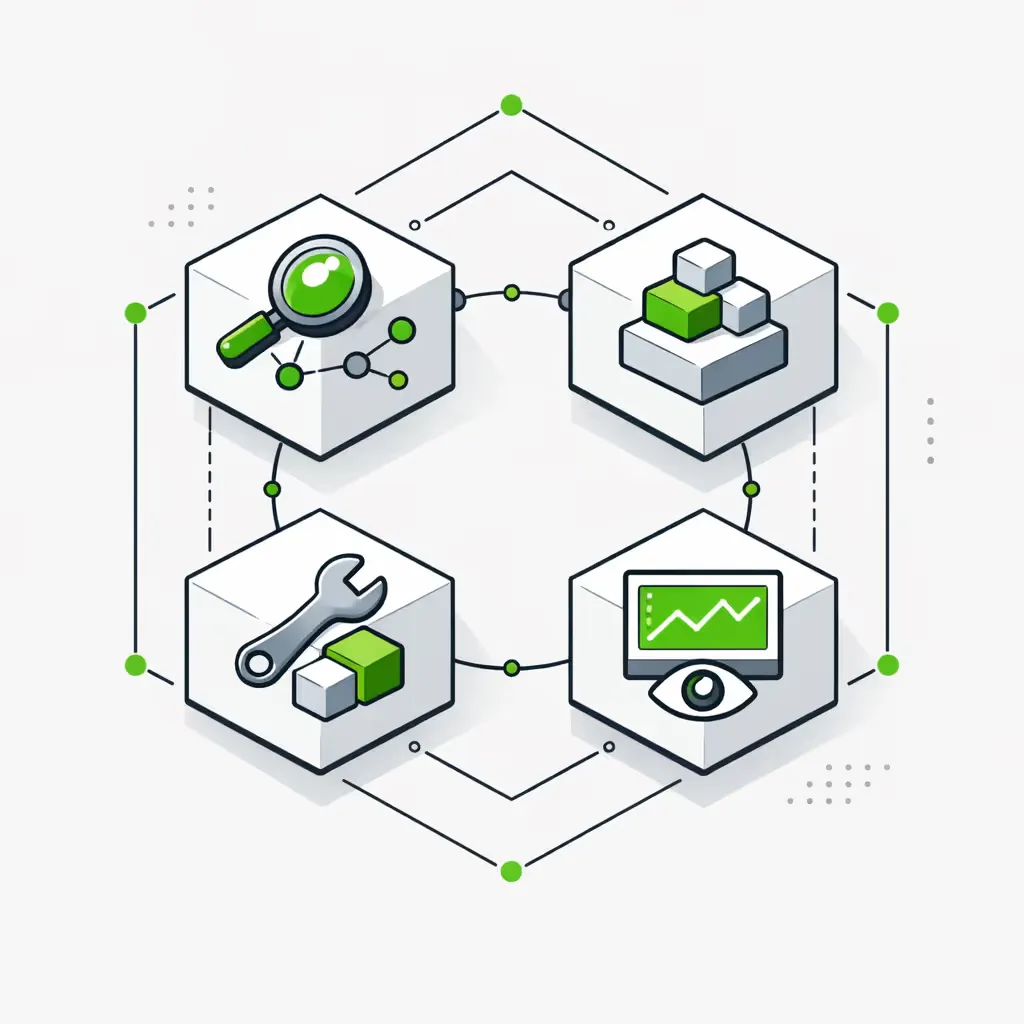
The Healthcare Practice Backbone
The five connected systems that turn a practice from "running on heroics" into a operations business.
The Practice Automation Backbone
We install the complete workflow infrastructure a 5-50 provider practice needs:
Intake & Scheduling
Pre-visit form collection, EHR push, eligibility verification, automated reminders, waitlist + no-show recovery - all running 24/7 against your scheduler.
Insurance Verification
Automated eligibility checks via Availity or Change Healthcare 24 hours before every visit, with mismatch flags routed to front-desk staff before the patient arrives.
Prior-Auth Tracking
Payer-specific submission paths, SLA timers per payer, automatic escalation, and a single dashboard for the PA coordinator instead of seven inboxes.
Billing Pipeline
Encounter-to-claim charge capture, denial-reason tracking, rework routing prioritized by dollar value, and patient-balance follow-up sequences integrated with your patient portal.
Patient Communications
TCPA-aware SMS, encrypted PHI email, voice reminder campaigns, recall outreach, and review requests - all logged as touchpoints in the EHR.
Referral Workflow
A tracked queue for inbound and outbound referrals - receiving provider, expected follow-up, automated loop-closure, and reporting on referral-source value. The work stops living in someone's head.
Recall Automation
Annual physicals, chronic-condition touchpoints, lab follow-ups, and post-discharge check-ins triggered by EHR events. Preventive outreach runs as a system, not a quarterly campaign someone has to remember to start.
How we install it
We don't do six-month big-bang projects. Each phase ships value before the next one starts.
- 1
Week 1. Practice Workflow Discovery
We sit with your office manager, billing coordinator, and one provider. We map the actual flow - what happens in the EHR, what happens in email, what happens on sticky notes. We come out with a ranked list of automation targets, ROI per target, and a 90-day plan.
- 2
Weeks 2-5. Foundation Build
The first system goes live - usually intake or insurance verification because they're high-volume and easy to measure. We integrate against your EHR's documented API or a sanctioned middleware path. No screen-scraping unless there's no other option.
- 3
Weeks 6-9. Layer In Adjacent Workflows
Prior-auth tracking, no-show recovery, recall campaigns - whatever ranked highest in discovery. Each system is tested on a single provider or service line before practice-wide rollout.
- 4
Ongoing. Backbone Expansion
Once the core is running, we extend: AR follow-up, referral workflow, post-visit communications, dashboard reporting for the practice owner. New requests go into the engineering channel we run for you.
WHY PRACTICES PICK US
What makes us different from a generic agency or an EHR consultant
HIPAA-aware engineering
Every component is built with PHI handling in mind: encrypted-at-rest stores, audit logs, BAAs with every subprocessor, no PHI in non-HIPAA-eligible LLM endpoints. We document this so your compliance officer can sign off without a panic attack.
No rip-and-replace EHR
We don't sell EHR migrations. Your Athenahealth, Tebra, or eClinicalWorks stays. We connect to it via the supported API and build the automation around it. If your EHR has no API, we tell you honestly which workflows we can't reach.
Regulated-comms aware
TCPA for patient texting, HIPAA for PHI in email, state-specific consent rules for behavioral health. We build consent capture into intake and honor opt-outs across every channel - not as a feature, as a default.
Your stack, not ours
We work with whatever you have - Athenahealth + Klara + QuickBooks, Tebra + Twilio + Availity, whatever. We don't push you onto a proprietary platform. You own the integrations after we leave.
Retainer, not project bill
Healthcare practices change constantly - new payers, new providers, new codes, new state rules. Our model is a monthly retainer after the build, so the system keeps adapting instead of decaying.
Systems we connect inside healthcare practices
These are the tools we've built production integrations against for medical practices and clinics.
Engagement & pricing
Practice automation engagements typically start at a $7K-$13K Foundation build (4 weeks, first system live) followed by a monthly retainer in the $1K-$5K range that covers monitoring, optimization, and the next system in the queue.
Custom system installs in the backbone - a complete prior-auth pipeline, for example - run $15K-$40K depending on payer mix and integration complexity. We don't take projects where we can't show a defensible ROI within 6 months.
- Week 1 Discovery Workshop: $2K - practice walkthrough + roadmap + ROI ranking. Credits against the Foundation build if you continue.
- Foundation Build: $7K-$13K - first system live in 28 days.
- System Installs: $15K-$40K each - intake, prior-auth, AR follow-up, etc.
- Monthly Retainer: from $1K/mo - monitoring, optimization, new requests.
Frequently asked questions about healthcare practice automation
HIPAA - how do you handle PHI?
Every component that touches PHI is built on HIPAA-eligible infrastructure with encryption at rest and in transit, audit logging, role-based access, and a signed BAA with every subprocessor we use. We don't route PHI through non-HIPAA endpoints (including most consumer LLM APIs). We document our PHI handling for your compliance officer as part of the deliverable. See our operations automation pillar for the broader engineering approach.
Do you replace our EHR?
No. We don't sell EHR migrations and we don't push a proprietary platform. Your Athenahealth, Tebra, eClinicalWorks, or whatever you run stays - we connect automation around it. If your EHR has no API or only a limited one, we tell you which workflows we can reach and which we can't.
Can you integrate Athenahealth, eClinicalWorks, Kareo, or Tebra?
Yes - all four are in our regular stack. Athenahealth has the cleanest API surface; Tebra (formerly Kareo) and eClinicalWorks have working APIs with documented quirks. We've built intake push, scheduling sync, and charge-capture flows against each. For older or less-supported EHRs we evaluate the API on a case-by-case basis.
What about TCPA-compliant patient texting?
TCPA consent capture is built into intake - patients explicitly opt in to text, voice, and email channels per channel, and opt-outs are honored across the whole system. We log consent timestamps in the EHR and the comms platform. Behavioral health practices get additional state-specific consent flows.
Will it work with our existing patient portal?
Most likely yes. We've integrated with the major portals (Athena Patient Portal, FollowMyHealth, Klara, Healow). If your portal is a proprietary practice-built one, we evaluate the integration path during discovery.
Can it handle prior-auth across multiple payers?
Yes - payer-specific submission paths are the whole point of the prior-auth module. We model each payer's submission requirements, SLA expectations, and escalation paths separately, then surface them in a single coordinator dashboard. The system also tracks payer behavior over time so you know which payers consistently miss SLA.
How does this differ from RPA tools like UiPath in healthcare?
RPA (UiPath, Automation Anywhere) wins when your EHR has no API and you genuinely need to drive a UI. We use it as a fallback. For everything with a documented API, native integration is more reliable, cheaper to maintain, and survives EHR updates. Most modern EHRs now have enough API surface that pure RPA approaches are overkill. See our RPA vs AI automation post for the longer comparison.
Typical engagement for a 12-provider practice?
Foundation build (first system live) runs $7K-$13K over four weeks. Most 12-provider practices then extend into prior-auth, AR follow-up, and recall over the next 3-6 months, totaling $25K-$60K in build cost and a $1.5K-$4K monthly retainer. ROI typically lands at 3-6 months on intake/AR systems alone - use our ROI calculator to model your case.
START HERE
Get your Practice Efficiency Scorecard
10 minutes. You'll see exactly where your practice leaks hours and revenue - intake, prior-auth, AR, no-shows - and which workflows have the highest ROI to automate first. You get the scorecard whether we end up working together or not.
If you want the bigger picture before you click, read our AI automation guide or how to automate healthcare workflows.