Finance Automation Agency
Your finance team spends 40+ hours monthly on manual work that should take minutes. Manual invoice processing, spreadsheet-based reconciliations, month-end close that drags on for weeks. We implement the complete finance automation backbone that eliminates manual workflows and delivers positive ROI in 6 months.
Finance Automation That Delivers ROI in 6 Months
Results our $1M+ finance clients see
Stop Losing Money on Finance Operations
Manual invoice entry burns 15–20 hours weekly per accountant
AP clerks spend full days matching invoices to purchase orders and routing for approvals. Invoices sit in email waiting for manual entry.
Payment processing delays cost you discounts and relationships
Late payments lose early payment discounts and damage vendor relationships. Cash position visibility is days behind reality.
Month-end close takes 10–15 days when it should take 3
Reconciliations are manual. Journal entries require spreadsheet calculations. Financial reports are days old by the time they reach decision-makers.
Reconciliation errors force hunts for $2 discrepancies
Your team spends days hunting down discrepancies that automation prevents in the first place. Time disappears into low-value detective work.
Compliance documentation creates audit risk
Paper trails are incomplete or missing. Every manual finance workflow costs you time, accuracy, and strategic focus.
Finance Automation Built for $1M+ Companies
We implement connected finance automation systems that handle invoicing, reconciliation, payments, and reporting — automatically.
The Finance Automation Backbone
We install the complete finance automation infrastructure your business needs:
Accounts Payable Automation
Invoices get captured, matched to purchase orders, routed for approval, and posted to your ERP without manual data entry. Payment batches generate automatically based on your approval rules and cash position.
Accounts Receivable Workflows
Customer invoices generate from your CRM or project management system, send automatically on schedule, and track payment status. Reminders escalate based on aging and customer priority.
Financial Reconciliation
Bank statements import and reconcile to your GL automatically. Discrepancies surface with supporting documentation attached. Exception handling routes to the right person based on transaction type and amount.
Month-End Close Automation
Accruals calculate based on system data and historical patterns. Journal entries post automatically with complete audit trails. Close checklists track completion and enforce dependencies so nothing gets missed.
Financial Reporting and Dashboards
P&L, balance sheet, and cash flow statements update in real time. Custom dashboards show metrics that matter — burn rate, days payable outstanding, working capital. Board reports generate automatically with formatted tables and variance explanations.
Custom Builds
When your finance operation needs something off-the-shelf can't deliver, we build it. Custom approval routing across departments, bespoke vendor portals, specialized variance reporting, integrations with proprietary systems. These run in parallel to backbone installation without slowing it down.
Ongoing Management
Once your finance automation is live, we keep it running. 24/7 monitoring, SLA-based response for issues, monthly optimization based on actual usage patterns, updates when your tools change, and a dedicated engineering channel for new requests.
Why Finance Teams Choose 2V Automation
-
15 YEARS AUTOMATING FINANCE OPERATIONS
We've built finance automation systems for companies across industries. We know the difference between invoice processing that works in a demo and invoice processing that handles real vendor variability. -
PRODUCTION-GRADE IMPLEMENTATION
Our finance automations include error handling, logging, monitoring, and recovery. When exceptions happen, the system alerts the right person and preserves the transaction trail. Your auditors will approve. -
N8N EXPERTISE
We build on n8n — the most flexible automation platform for finance workflows. Connect any system through APIs or database access. Build complex approval routing and conditional logic. Deploy on your infrastructure or ours. -
6-MONTH ROI GUARANTEE
We work only with companies where we can deliver positive ROI within 6 months. If the time savings and cost reduction don't exceed our fees, we keep working until they do. -
ONGOING SUPPORT INCLUDED
All finance automation systems include 24/7 monitoring, SLA-based response for issues, and monthly optimization. Your finance automations stay running as your business changes.
Finance Workflows We Automate
-

Invoice Processing and AP
Capture invoices from email, match to purchase orders, route through approval workflows, and post to your accounting system. Payment batches generate based on your payment terms and cash flow requirements. Mismatched invoices route to the right person based on the type of discrepancy — price variance to procurement, quantity variance to receiving, missing PO to the requester.
-
Cash Application and AR
Match incoming payments to open invoices automatically. Send invoice reminders based on aging. Generate customer statements on schedule. Track DSO and aging metrics in real time. Customer invoices generate from your CRM or project management system and send automatically on schedule.
-

Bank Reconciliation and Month-End Close
Import bank statements, match transactions to GL entries, surface exceptions with supporting documentation. Handle multi-currency reconciliations and intercompany transactions. Calculate accruals based on system data, generate journal entries with complete audit trails, and run close checklists that enforce dependencies.
-

Financial Reporting and Compliance
Generate P&L, balance sheet, and cash flow statements on demand. Create board reports with formatted tables and trend analysis. Build custom dashboards showing KPIs that matter to your business. Maintain complete documentation for every financial transaction. Generate audit reports showing who approved what and when.
How Finance Automation Transforms Your Operations
Before Automation
Invoices sit in email waiting for manual entry. AP clerks spend full days matching invoices to purchase orders and routing for approvals. Month-end close takes 12 days because reconciliations are manual and journal entries require spreadsheet calculations. Financial reports are days old by the time they reach decision-makers.
After Automation
Invoices get captured from email, matched to POs automatically, and routed through approval workflows without touching a keyboard. Reconciliations run on schedule and surface only exceptions that need human review. Month-end close completes in 3 days because journal entries post automatically with complete backup. Financial dashboards update in real time so you always know your cash position and profitability.
The difference isn't just speed — it's control and confidence in your numbers.
Our Finance Automation Approach
We implement complete finance automation infrastructure — not one-off scripts that break.
- 1
Step 1. Finance Operations Analysis
We map your current finance workflows from invoice receipt through financial reporting. We identify where manual work creates delays and where errors happen most. We measure time spent on each process and calculate potential savings.
- 2
Step 2. System Design
We design automated workflows that connect your ERP, banking systems, CRM, and other finance tools. We define approval rules, exception handling, and escalation paths. We build in error recovery and monitoring so automations don't fail silently.
- 3
Step 3. Implementation
We build production-grade automation using n8n and enterprise integration patterns. Each workflow includes logging, error handling, and monitoring. We test with real transaction data before going live.
- 4
Step 4. Deployment and Training
We deploy automations one system at a time so your team learns incrementally. We document every workflow with diagrams and operating procedures. We train your finance team on monitoring and basic troubleshooting.
- 5
Step 5. Monitoring and Optimization
We monitor all finance automations 24/7 and handle issues before they impact your operations. We optimize workflows based on actual usage patterns. We add new automations as your finance processes evolve.
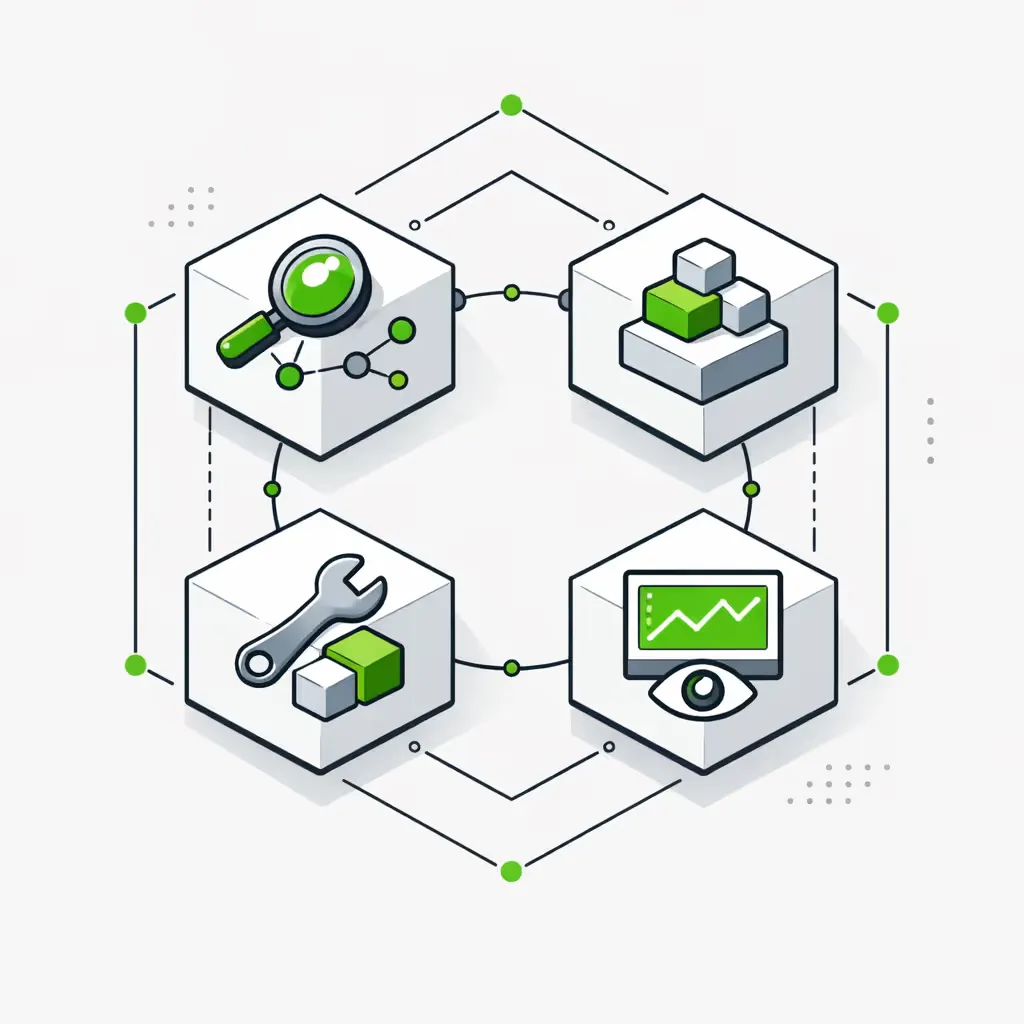
Additional Finance Workflows We Automate
Expense Management Flows
Employee expenses route through approval workflows based on amount and category. Receipts attach automatically. Reimbursements batch and export to payroll or AP systems.
Budget Management
Track actual spending against budget by department and category. Alert when spending exceeds thresholds. Generate budget variance reports showing why actuals differ from plan.
Compliance and Audit Trails
Maintain complete documentation for every financial transaction. Generate audit reports showing who approved what and when. Track changes to master data like vendors, customers, and chart of accounts.
Finance Systems We Connect
We integrate with the accounting platforms, ERPs, and financial tools you already use.
Frequently Asked Questions
If you have a question, chances are you'll find the answer below.
What makes finance automation different from general business automation?
Finance automation requires precision, compliance, and audit trails that general automation doesn't. Invoice matching must handle vendor variability and PO discrepancies. Reconciliations need to preserve transaction details for audits. Journal entries must post with complete backup documentation. We build finance automations that accountants and auditors trust.
How long does finance automation implementation take?
Invoice processing automation typically goes live in 2–3 weeks. Complete month-end close automation takes 2–3 months because it touches multiple systems and requires testing across accounting periods. We implement one system at a time so you see ROI quickly rather than waiting months for a big-bang deployment.
Will finance automation work with our ERP?
Yes. We connect to QuickBooks, Xero, NetSuite, Sage, Microsoft Dynamics, SAP, and other accounting platforms through APIs or database integration. If your ERP has an API or database access, we can automate workflows with it.
What happens when vendor invoices don't match purchase orders?
The automation routes mismatched invoices to the right person based on the type of discrepancy — price variance goes to procurement, quantity variance goes to receiving, missing PO goes to the requester. The routing rules adapt to your approval policies and dollar thresholds.
How do you handle exceptions and errors in automated workflows?
Every finance automation includes error handling and exception routing. When an invoice can't be matched, a payment fails, or a reconciliation finds discrepancies, the system alerts the appropriate person and preserves the transaction trail. We design for the 5% of transactions that don't follow the happy path.
Can we customize approval workflows for different transaction types?
Yes. We configure approval routing based on amount, vendor, department, GL account, or any other transaction attribute. Different invoice types can flow through different approval chains. The routing logic lives in the automation platform, not in your ERP.
What financial data do you need access to?
We need read access to your accounting system, banking data, and related systems like CRM or project management. We design automations to work with the access you're comfortable providing — API access is preferred, but we can work with exports and database connections.
How do you ensure compliance and maintain audit trails?
Every automated finance workflow logs all actions, preserves supporting documentation, and tracks who approved each transaction. The audit trail shows exactly what the automation did and when. Your auditors get the same documentation they'd get from manual processes — often better because nothing gets lost or misfiled.
What if our finance processes change?
We document all workflows and provide training so your team can make basic changes. For structural changes, we include ongoing optimization in our support plans. As your business evolves, your finance automations evolve with it.
Do we need to change our accounting systems?
No. We build automation on top of your existing systems. Your ERP, accounting software, and banking platforms stay exactly as they are. We connect them through APIs and workflows that run in the background.
Start with Your Efficiency Scorecard
Finance automation pays for itself in 6 months through time savings and cost reduction. The scorecard shows you where your finance team loses time to manual workflows, which processes create the biggest bottlenecks, the ROI timeline for automating each workflow, and estimated annual savings. It takes 10 minutes — and you get actionable insights whether we work together or not.
