Marketing Agency Automation - Operations Built for Agencies, Not for Their Clients
Most agencies preach automation. Few run on it. We install the operations backbone that lets 10-100-person marketing agencies report, deliver, and renew without burning through senior margin. Built for the agency itself - not for its clients.
You sell automation. Your own ops run on spreadsheets and Friday heroics.
The same kind of automation backbone you'd sell a client - applied to your own agency.
What we automate for agencies
Eight workflows that swallow senior agency time. Pick the ones bleeding the most hours.
-

Client reporting automation
Monthly and weekly client decks generated from live Looker Studio, Whatagraph, AgencyAnalytics, GA4, ad-platform, and CRM data. Templates by service line. Commentary drafted from period-over-period deltas. AMs review and ship - they don't build.
-

Project margin tracking
Hours, cost, scope, and revenue per project rolled up live - not at quarter-close. Margin-at-risk alerts when a project trends underwater. Per-client and per-service-line margin dashboards for the leadership team.
-

Content production pipeline
Brief intake → strategy → draft → review → revise → publish, with status tracking, SLA enforcement, and AI-assisted drafting where it earns its keep. Senior reviewers stop being the bottleneck for first drafts.
-

Time → billing → margin
Time captured passively from PM and calendar activity, routed to the right billable code, fed into pre-bills, invoiced, and reconciled - without AMs reconstructing weeks of activity on Friday.
-
Lead-qualification ops
Inbound new-business leads scored, enriched, routed to the right partner, and tracked through pitch. Lost-deal reason capture feeds new-business strategy. Pitch-to-close cycle compresses.
-

Retainer renewal triggers
Renewal-window dashboard with health signals (NPS, project margin, service-mix changes, sentiment from comms). Renewal proposals generated from contract data and last 90 days of work. Partners review and send.
-
NPS / churn signal monitoring
NPS, CSAT, response-time signals, late-payment patterns, and email-sentiment shifts surfaced as a churn-risk score per client. Saves clients while they're saveable instead of after the cancel notice.
-
New-business proposal generation
Discovery-call notes → proposal in minutes. CRM data, service-line pricing, case-study references, and brand-compliant template all pulled together. Samy went from 40-minute proposal turnaround to 10 seconds on this exact pattern.
Three agency types we serve
-
PERFORMANCE AGENCIES
Data-heavy reporting practices - paid media, SEO, CRO. Client reporting and ad-platform-to-margin attribution drive the most recovered hours. Looker Studio, Whatagraph, and AgencyAnalytics integration is table stakes. -
CREATIVE AGENCIES
Production-heavy practices - brand, content, design, video. Content production pipeline and project margin tracking deliver the fastest payback. Asana / Monday / ClickUp orchestration sits at the center of the Backbone. -
FULL-SERVICE AGENCIES
Retainer-heavy practices running multi-team account teams. Renewal triggers, churn signals, and per-service-line margin become the leadership team's home screen. The Backbone unifies what would otherwise be five separate dashboards.
What changes in 90 days
Documented + composite ranges from agency engagements
The Agency Operations Backbone
One system, five connected modules, plus optional layers. Plugs into your PSA, PM, time-tracking, reporting, and CRM tools - we don't replace any of them.
The Agency Operations Backbone
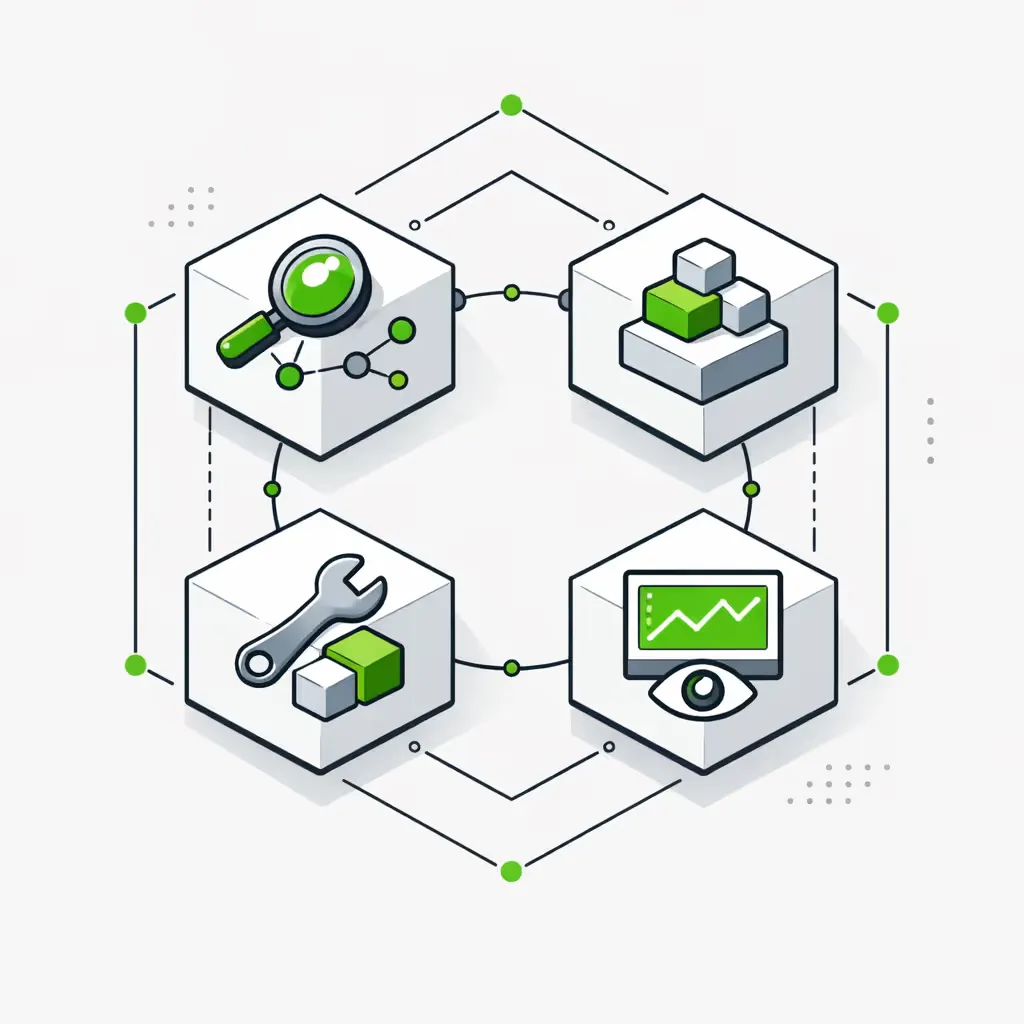
Connected modules that turn your stack of tools into an agency that runs as a system:
Client Reporting
Monthly and weekly decks generated from live Looker Studio, Whatagraph, AgencyAnalytics, GA4, ad-platform, and CRM data. Templates by service line. Period-over-period commentary drafted by AI grounded in your real reporting voice. AMs review and ship - they don't rebuild reports each month.
Project Margin
Hours from Harvest/Hubstaff/Toggl/ClickUp Time, cost from payroll and vendor systems, revenue from the CRM, scope from PM - rolled up live per project, per client, per service line. Margin-at-risk alerts fire before quarter-close. Leadership sees the full P&L of the book on one screen.
Content Pipeline
Brief → strategy → draft → review → revise → publish with SLA-enforced status tracking. AI-assisted drafting where it earns its keep (first-pass blog drafts, social caption variants, meta descriptions). Senior reviewers stop being the bottleneck for first drafts; they review final.
Time → Billing
Time captured passively from PM and calendar activity, suggested as billable entries to the AM, routed through pre-bills, invoiced on cycle, and reconciled against margin. Realization climbs because billable work stops falling on the floor.
Renewal Triggers
Renewal-window dashboard with health signals (NPS, margin, service mix, sentiment) per client. Renewal proposals generated 60 days out from contract end, partner-reviewed, sent. Renewal rate climbs without partner heroics.
New Business Ops
Optional module for agencies with active outbound or steady inbound pipeline: lead enrichment, qualification scoring, partner routing, pitch tracking, proposal generation, and lost-deal reason capture. Samy/SEO agency benchmark - 40-minute proposal turnaround to 10 seconds - sits in this module.
Tool Stack Integration
We plug into the PSA, PM, time-tracking, and reporting tools you already pay for - Asana, Monday, ClickUp, Notion, Harvest, Hubstaff, Toggl, HubSpot, Pipedrive, Looker Studio, Whatagraph, AgencyAnalytics. The Backbone doesn't replace any of them; it makes them talk.
How we install it
Five-step playbook. Each phase delivers value before the next begins.
- 1
Step 1. Efficiency Scorecard
Ten-minute diagnostic mapping where senior hours actually go - reporting, proposals, margin guesswork, late renewals. Prioritized roadmap whether we engage or not.
- 2
Step 2. Roadmap Design
12-month plan ordered by ROI. Performance agencies usually start with client reporting; creative agencies with content pipeline + margin; full-service with renewal triggers. Built around your existing stack.
- 3
Step 3. Phased Implementation
One module at a time. Each goes live and pays for itself before the next starts. Built on production infrastructure with monitoring and error recovery - not a Zap that breaks every time GA4 changes.
- 4
Step 4. Training and Handoff
AMs learn the report-review workflow. Leadership learns the margin dashboards. Partners learn the proposal generator. Full documentation, video walkthroughs. The agency owns and can extend the system.
- 5
Step 5. Ongoing Monitoring
24/7 monitoring, automated error recovery, monthly optimization reviews, updates when Looker Studio, ad platforms, or your PSA ship breaking changes. SLA-based incident response.
What makes 2V different
Built for agencies, not for their clients
Most automation shops sell to brands. We've spent years inside agencies - we know the difference between automation that wins pitches and automation that pays the bills. This is for the second one.
PSA + PM + reporting fluency
Asana, Monday, ClickUp, Notion, Harvest, Hubstaff, Toggl, Looker Studio, Whatagraph, AgencyAnalytics - we've shipped against all of them in production. We're not learning your stack on your time.
Engineering depth, not 'agency consulting'
20+ years of senior engineering. We build production systems with monitoring, error handling, and observability - not Zaps held together with hope.
ROI-first, retainer-second
We only take engagements where the payback math is defensible in six months. We model recovered senior hours and renewal-rate uplift before we quote - and we walk if it doesn't pencil.
Your stack, not ours
We don't push a preferred PSA, PM, or reporting tool. We plug into what you already pay for. The only thing we replace is the spreadsheet.
Stack we connect
We've integrated each of these in production agency environments. If your agency runs on it, we've probably already shipped against it.
Engagement
Workshop & Scorecard - half-day diagnostic, $2.5K. Prioritized roadmap whether we build or not.
Foundation install - typical $15-50K depending on service mix, tool count, and module set. Goes live module by module.
Ongoing retainer - from $1K/mo for monitoring + maintenance. Higher tiers add ongoing build capacity for new service lines, new reporting templates, or new client onboardings.
Frequently asked questions
The questions agency owners and COOs ask us before signing the workshop.
Do you serve digital agencies, creative agencies, or both?
Both. Performance/digital agencies typically start with client reporting and ad-platform-to-margin attribution. Creative agencies start with content production pipeline and project margin. Full-service agencies usually start with renewal triggers and churn signals. The Backbone is the same; the entry module differs.
Will you build automation for our clients, or just our agency ops?
Just your agency ops. We're not a white-label vendor for your service delivery. If a client needs marketing automation for their own team we'll happily refer or co-engage - but it's a separate engagement.
How do you handle multi-client reporting at scale?
Templates by service line, data-source connections per client, automated commentary drafting from period-over-period deltas. We've shipped reporting systems running 80+ active clients on a single Backbone. Reports go out faster, the AM team spends time reviewing instead of building, and report quality goes up because the structure is consistent. Long-form here.
Can you integrate Looker Studio / Whatagraph / Klipfolio?
Yes - all three. Looker Studio via the Data Studio API + sheets/BigQuery, Whatagraph and Klipfolio via their REST APIs. Most agencies run a mix; we work with whatever you already pay for instead of pushing a vendor.
What about ad-platform API limits?
Meta, Google, LinkedIn, TikTok - we've shipped against all of them at agency-book scale. Rate-limit-aware queueing, exponential backoff, and intelligent batching are first-class concerns. We're honest about which platforms (looking at you, TikTok Ads API) need conservative pacing.
Will this replace our project manager?
No. PMs stop being status-update couriers and start running exception management. The Backbone handles tracking, prompts, and report assembly; PMs handle the conversations, the scope changes, and the saves. The agencies we work with don't shrink PM headcount - they grow client load per PM.
How does it differ from agency PSA tools (Scoro, Productive, Mavenlink)?
PSA tools are great at the data model - projects, timesheets, retainers. They're often weak at reporting orchestration, content pipeline, and AI-grounded drafting. We work alongside your PSA; the Backbone reads from it and writes back to it. If you don't have a PSA, we'll be honest about whether you should adopt one or whether the Backbone can substitute. More on the trade-offs here.
What's the typical engagement size?
$15-50K foundation install, $1K-5K/mo retainer. Agencies with 10-30 staff usually land at the lower end; 50-100-staff agencies at the upper end. Payback math typically pencils in 4-7 months on recovered senior hours alone - renewal-rate uplift is upside on top of that. Model your own here.
Start here
Start with Your Efficiency Scorecard
Ten minutes. You'll see where senior hours actually leak - reporting, proposals, margin guesswork, late renewals - and which automations would pay back fastest. From there: workshop, roadmap, phased install. The agency operations backbone you'd build for a client, applied to yourself.