Quote-to-Cash Automation — Finally Connected
Five hand-offs, five places to bleed money
One Backbone, every handoff automated
What quote-to-cash actually looks like in production
Five steps. Every transition is automated. Every state change is logged. You see exactly where every deal sits at any moment.
- 1
Step 1. Opportunity
A qualified opportunity in HubSpot, Salesforce, or Pipedrive moves to the quoting stage. The Backbone pre-populates the quote with the right product, price tier, terms, and approval chain based on deal attributes — no rep wrestling with a template.
- 2
Step 2. Quote
Dynamic quote generation creates the proposal in PandaDoc, DocuSign, or your custom system. Pricing logic, discount caps, and approval gates are enforced. Redlining and e-sign route automatically. The CRM reflects every change in real time.
- 3
Step 3. Signed deal
Signature triggers the downstream cascade: client record syncs to QuickBooks or Xero, project folder spins up in Google Drive or SharePoint, ClickUp/Asana/Monday project gets created with the right task template, kickoff email goes out with the right context.
- 4
Step 4. Project setup
Tasks assign to the right team members based on service line. Calendar holds, Slack channel creation, time-tracking project setup, and document templating all happen before the kickoff call. The PM walks into a fully-staged project.
- 5
Step 5. Invoice & onboarding
Deposit invoice generates and ships from QuickBooks or Xero on the schedule the deal terms require. AR aging tracks payment. The onboarding sequence runs against the client until the project is in steady state. The loop closes.
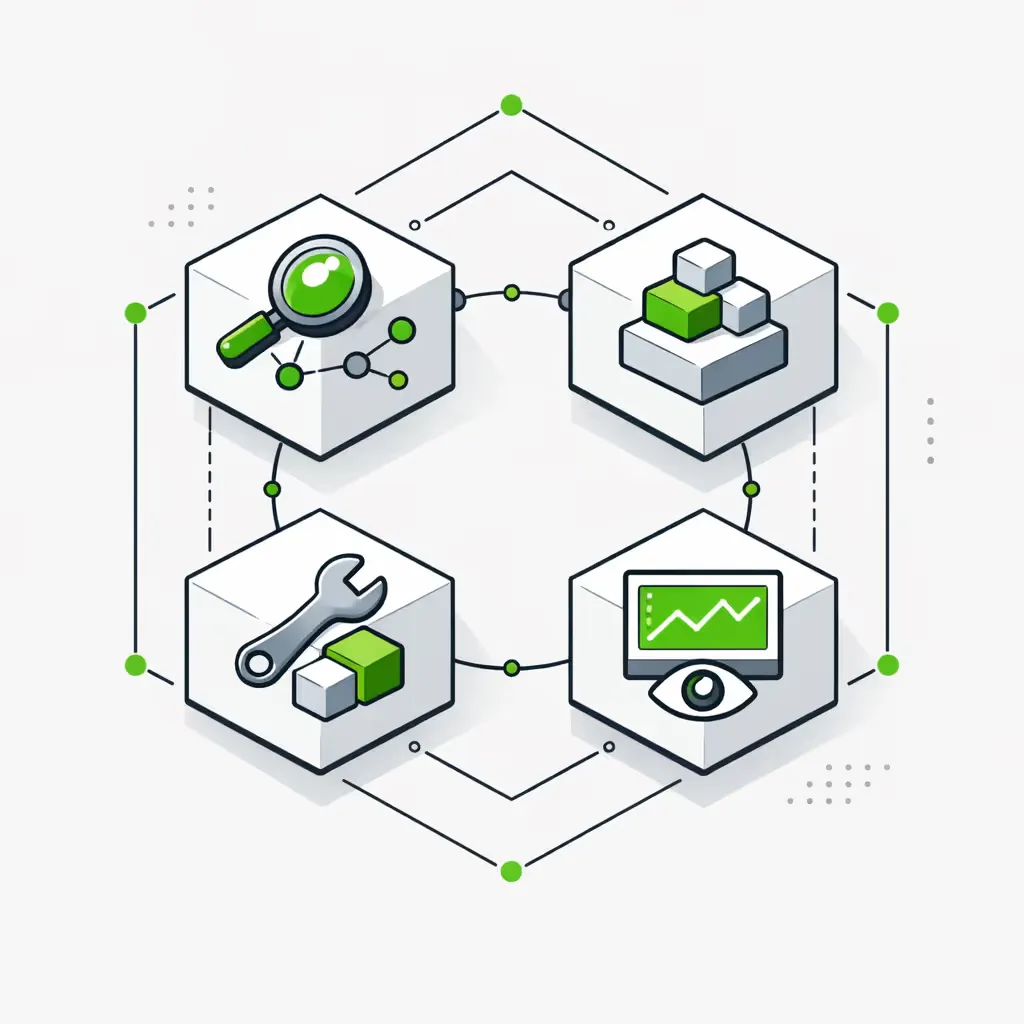
What we automate
Six modules that compose into the Backbone. Most clients install three or four in the first 28 days.
-

Dynamic quote generation
Quote drafts pre-populate from the CRM with the right SKU mix, price tier, discount logic, and term selections. Reps spend minutes, not hours. Approval chains enforce automatically when a discount or scope crosses a threshold.
-

E-sign + redlining
PandaDoc, DocuSign, SignWell, or custom — we wire the e-sign layer so signature events flow back into the CRM and trigger downstream. Redline rounds get tracked, not lost in email.
-

Signed-deal → project auto-creation
ClickUp, Asana, Monday, or Notion projects spin up from the deal with the right task template, deadlines, dependencies, and owners. Service-line logic picks the right template; deal data fills the right fields.
-
Folder + task templating
Google Drive or SharePoint folder structures, Slack channels, calendar holds, time-tracking projects, and document templates all spin up so the PM walks into a staged project — not an empty workspace.
-

Kickoff email + handoff
Onboarding emails ship from the right rep with the right context, calendar links, and access credentials. Handoff brief auto-generates for the delivery team with every relevant deal detail surfaced — no Slack archeology.
-
Invoice generation + AR follow-up
Deposit, milestone, and final invoices generate in QuickBooks, Xero, or Stripe Invoicing on the schedule the deal terms require. AR aging dashboards show open balances. Follow-up sequences run automatically without sounding like a robot.
Real outcomes — Contrail Financial case
What changed after Quote-to-Cash went live at a fractional-CFO firm
The Backbone
Quote-to-Cash Backbone — what we install
One deep module that runs the pipeline, plus two lighter modules that close the revenue loop.
Quote-to-Cash Module
The complete handoff layer connecting CRM, CPQ, project tool, and accounting:
Quote Engine
Dynamic quote generation with SKU logic, discount caps, approval gates, and term enforcement. Reps spend minutes, not hours; finance gets clean data.
E-sign Integration
PandaDoc, DocuSign, SignWell, or custom — signature events flow back into the CRM and trigger downstream cascades automatically.
Project Auto-Setup
Signed deal spins up the project in ClickUp, Asana, Monday, or Notion with the right task template, owners, and deadlines for the service line.
Onboarding Trigger
Kickoff email, calendar holds, Slack channel, document folder, and access provisioning fire in parallel — PM walks into a fully-staged project.
Invoice Pipeline
Deposit, milestone, and final invoices generate in QuickBooks or Xero on the schedule the deal terms require. No more 'did anyone invoice the deposit?'
AR Follow-up
Aging dashboards plus polite, well-paced follow-up sequences that close the cash loop without sounding like a collections agency.
Margin Reporting
Live dashboards that pull from CRM, time tracking, and accounting to show project margin, utilization, and forecast in real time. See our /systems/operations-dashboard-reporting module for the full reporting layer.
Renewal & Expansion
Project signals (milestone completion, satisfaction, scope expansion requests) flow back into the CRM so renewals don't depend on a rep remembering. The loop closes from cash back to opportunity.
Stack
Where it slots into your stack
We work native-first with the tools you already run. No proprietary middleware, no rip-and-replace.
Why 2V
What makes our Quote-to-Cash different
Native-first, no middleware tax
We use each platform's native API and webhook layer wherever it exists. We add middleware only when there's no other option — and we tell you when we do. No proprietary glue you're stuck paying for forever.
Your stack, not ours
HubSpot, Salesforce, Pipedrive, ClickUp, Asana, Monday, QuickBooks, Xero — pick yours. We've integrated all of them. The Backbone runs on what you already pay for, not on a tool we resell.
Full audit trail
Every state change, every quote edit, every invoice send is logged with timestamps and actor. When finance asks 'who approved that discount?' the answer is one query away, not a Slack archaeology dig.
Margin-aware
Quote-to-cash without margin visibility is half a system. We instrument the pipeline so utilization, project margin, and effective rate are visible per deal — not just at month-end.
Ongoing Expansion, not one-shot delivery
Your tools change. Pricing changes. Service lines change. We keep the Backbone running on retainer — monitoring, fixes, expansions — so the system you launch with isn't the system you're stuck with three years later.
Engagement & pricing
We start with a paid workshop, then install the Foundation Backbone in 28 days, then keep it running on a monthly retainer. Each phase delivers measurable value before you commit to the next.
If we can't show ROI inside six months, we don't take the project.
- Discovery workshop: $2K — Map the current handoff cycle, score the leaks, prioritize the 28-day build.
- Foundation Backbone build: $7K–$13K — Install the first wave (usually quote engine + signed-deal trigger + invoice pipeline).
- Ongoing Expansion retainer: From $1K/month for monitoring + small fixes; $3.5K/month for active expansion; $6.5K/month for embedded ops engineering.
Frequently Asked Questions
If you have a question, chances are you'll find the answer below.
Do you replace our CRM, or work with it?
We work with it. CRM migrations are expensive, disruptive, and rarely the actual problem — the problem is usually that your CRM doesn't talk to the rest of your stack. We fix the talking part. If you genuinely need a CRM change, we'll tell you that, but in 95% of cases we don't. See the sales automation pillar for the broader CRM context.
Can you connect HubSpot and QuickBooks without Zapier?
Yes. We use native API and webhook integrations, often built on n8n or custom services we host, so the connection is production-grade and not subject to Zapier's per-task pricing model. See our n8n vs Zapier comparison and n8n pricing post for the economics.
What about CPQ — do we need PandaDoc / DocuSign CPQ?
Depends on the complexity. If your pricing is mostly catalog-driven with light discounting, a custom quote engine built on your CRM + a doc generator is usually faster and cheaper. If you have multi-tier pricing, configurable products, and approval chains, a real CPQ tool earns its keep. We'll tell you which side of the line you're on.
How does it handle complex pricing (tiers, discounts, multi-currency)?
We model the pricing logic explicitly — tiers, volume breaks, region multipliers, discount caps, approval thresholds, multi-currency conversion. The logic lives in code or in a config you can edit, not in tribal knowledge. When pricing changes, you change one place and the whole pipeline reflects it.
Do you build the project setup logic, or just the trigger?
Both. The trigger is the easy part. The hard part is the project setup logic — task templates by service line, folder structures, calendar holds, role assignments, document populating. We map your delivery process during the workshop and codify it during the build.
Where does it break — what's the limit?
It breaks when your underlying process isn't actually consistent. If every deal is a snowflake and the 'process' is whatever the rep negotiates that week, no automation will save you — you need process work first. See our pre-automation playbook for the diagnostic. We'll tell you on the workshop call if you're not ready.
How does this compare to a full ERP rollout?
Different beast. ERP rollouts replace your stack, take 9–18 months, and cost six figures up-front. Our Quote-to-Cash Backbone connects the stack you have, takes 28 days for the Foundation, and pays back inside 6 months. ERP is right when you've outgrown your accounting + ops tools at the same time. Otherwise, a connected stack wins. The finance automation pillar covers the accounting side; the operations automation pillar covers the ops side. Run the math with our ROI calculator before you commit either way.
Can we keep our existing quote templates?
Yes — and we usually recommend it. We rebuild the data-flow side (where the variables come from, how approval works, what triggers on signature) without touching the visual templates your reps already know. If the templates need work, that's a separate small project; we don't bundle it into the Backbone.
