Most automation projects fail in scoping, not execution
A focused diagnostic before the build
Operators evaluating an automation investment
How discovery actually runs
One week. Five stages. A roadmap you keep.
- 1
Day 1-2. Workshop kickoff
We sit with the operators — typically the COO, ops director, and 1-2 functional leads. Half-day session: walk through the business model, the operational stack, the workflows that consume the most time, and the metrics you actually track today. No prep required on your side.
- 2
Day 2-3. SOP archaeology
We compare your documented SOPs (if they exist) against what actually happens. Where do operators improvise? Where are the undocumented workarounds? Where do handoffs fail silently? This is where most of the high-ROI automation opportunities are hiding.
- 3
Day 3-4. Opportunity surfacing
We score every candidate workflow by ROI (hours saved + revenue impact + risk reduction), implementation complexity, and time-to-value. Workflows that look obvious but score low get parked. Workflows nobody mentioned but score high get surfaced.
- 4
Day 4-5. Roadmap + 12-month plan
We deliver a written 12-month plan: which workflows to automate in which order, what each phase looks like, what 'working' means for each, and what the investment is at each stage. You keep the document whether or not you build with us.
- 5
Week 2. Foundation build kickoff (if you continue)
If you choose to continue, the workshop fee credits against the 28-day Foundation build. The first system in the roadmap goes live four weeks later. If the workshop didn't land or you decide to build elsewhere, you leave with the roadmap and we both move on.
What you leave with
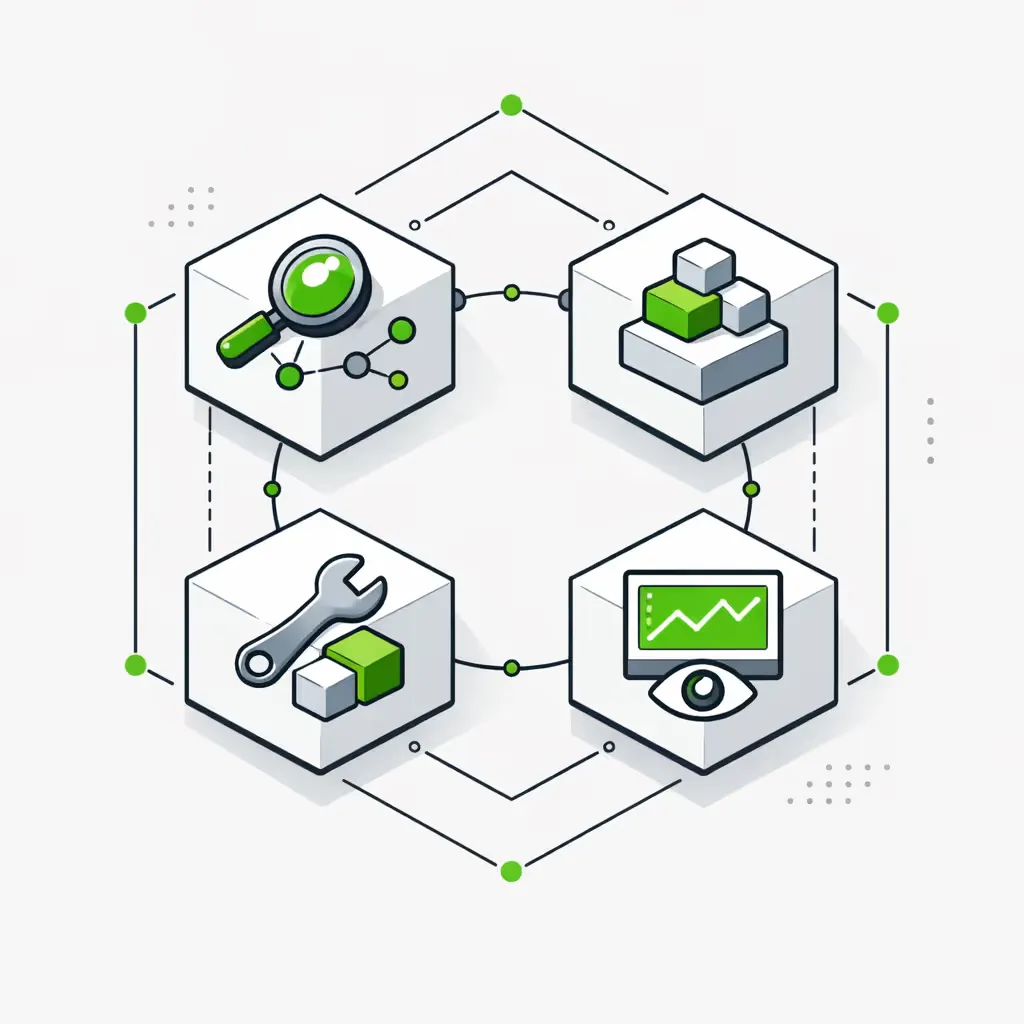
Four written deliverables. Yours to keep regardless of whether we continue.
-

SOP archaeology output
A map of how your operation actually runs — vs. what the documented SOPs say. Where operators improvise, where handoffs fail, where the undocumented workarounds live. Most operators learn something about their own business from this section alone.
-

Automation opportunity scoring matrix
Every candidate workflow scored across ROI (hours saved + revenue impact + risk reduction), implementation complexity, and time-to-value. Ranked, with the math. Workflows that look obvious but rank low get parked; workflows nobody mentioned but rank high get surfaced.
-

Roadmap with success metrics
A 12-month phased plan: phase 1, phase 2, phase 3 with clear success metrics for each. What 'working' means before we start. What 'done' looks like at the end of each phase.
-

12-month phased plan
Specific systems to install in order, with rough investment ranges per phase, expected ROI per phase, and decision gates between phases. You can hand it to another vendor and they could follow it. We hope you'd rather hand it back to us — but the choice is yours.
WHEN WHICH IS RIGHT
Workshop sprint vs free audit vs go-straight-to-build
-
WORKSHOP SPRINT (US)
Right when you know you need automation but don't know which workflows to prioritize, and you want a real ROI-ranked roadmap before committing $25K+ to a build. Costs $2K and credits if you continue. You leave with a written plan regardless. -
FREE AUDIT (MOST AGENCIES)
Right when you're price-shopping and want to see vendor approaches without commitment. Honest about the trade-off: free audits are sales tools, not diagnostics. The output is a proposal, not a roadmap, and the time the agency invests caps how deep they can go. We do a 30-min discovery call for free; the workshop costs because the depth costs. -
GO STRAIGHT TO BUILD
Right when you already know exactly which workflow to automate and have the SOPs documented, the data flow mapped, and the stakeholder alignment locked in. Rare, but it happens. In that case skip the workshop and we scope a fixed Foundation build directly.
Where it leads
The workshop isn't the engagement — it's the diagnostic that scopes the engagement. Most clients move from workshop into Foundation, then layer in Backbone modules over 6-12 months.
The full path is honest: $2K to find out, $7K–$13K to install the first system, then ~$15K–$50K per Backbone module after that. ROI is measurable at every stage. You can stop after any phase.
Typical engagement path
What a discovery week typically uncovers
A typical workshop reorders the team's automation wish-list within the first day. The workflows people thought were the priority usually aren't — and the highest-ROI build is one nobody had named going in. With Contrail Financial the pattern showed up clearly: ~$54K/year and 480 hours/year of reclaimable margin, most of it on a system the team hadn't initially flagged. The roadmap paid for itself in week one, before anything was built.
Frequently asked questions about discovery
How is this different from a sales call?
A sales call is 30-60 minutes, free, and the output is a proposal. The workshop is a week, $2K, and the output is a written roadmap. Sales calls happen first — we always do a 30-min discovery call to make sure there's a real fit before recommending the workshop. See our pre-automation playbook for what to look for in any discovery process.
Is the workshop required?
No. If you already have SOPs documented, data flows mapped, and stakeholder alignment locked in for a specific workflow, we can scope a Foundation build directly. In practice this is rare — usually one of those three things is missing and the workshop is the cheapest way to find out which.
What if we already know what we want to automate?
The workshop usually surfaces 1-2 things the original automation request would have missed. If it doesn't, we tell you honestly and refund the difference. We'd rather lose the project to clarity than win it to a build that doesn't move the business.
Do we get the roadmap document to keep?
Yes. The roadmap is a written document, delivered as a PDF and a structured workspace (Notion or Coda). You keep it whether or not you continue with us. If you choose to build elsewhere, the roadmap is detailed enough to hand to another vendor.
Can we run the workshop ourselves and skip it?
You can. Most teams don't, because the value of an outside operator running the diagnostic is being unafraid to ask 'why does it work that way?' about workflows the team has stopped questioning. If you have an internal ops architect who can do this honestly, go for it. Our 12-point automation audit checklist is a reasonable starting point for a DIY pass.
How long does the workshop take?
One business week, with about 6-10 hours of your team's time across the week (one half-day kickoff plus a handful of working sessions for SOP review and scoring validation). Most of the work happens on our side; your team's job is to be available and honest.
What's the cost?
$2K, fixed fee. Credits against the Foundation build if you continue with us. If you don't continue, you keep the roadmap and we both move on.
Does the workshop fee credit against the Foundation build?
Yes — the $2K credits in full against a Foundation build started within 60 days of workshop delivery. After 60 days the credit drops to $1K, after 120 days it expires. Most clients continue within 30 days when the workshop lands.
START HERE
Get your Efficiency Scorecard
The scorecard is the 10-minute version of discovery. Most clients start here. If the scorecard surfaces something worth digging into, the workshop is the next step.
For more context, read our consulting pillar, browse our Contrail Financial case study, or see which processes to automate first.
