Why contracts still bleed days
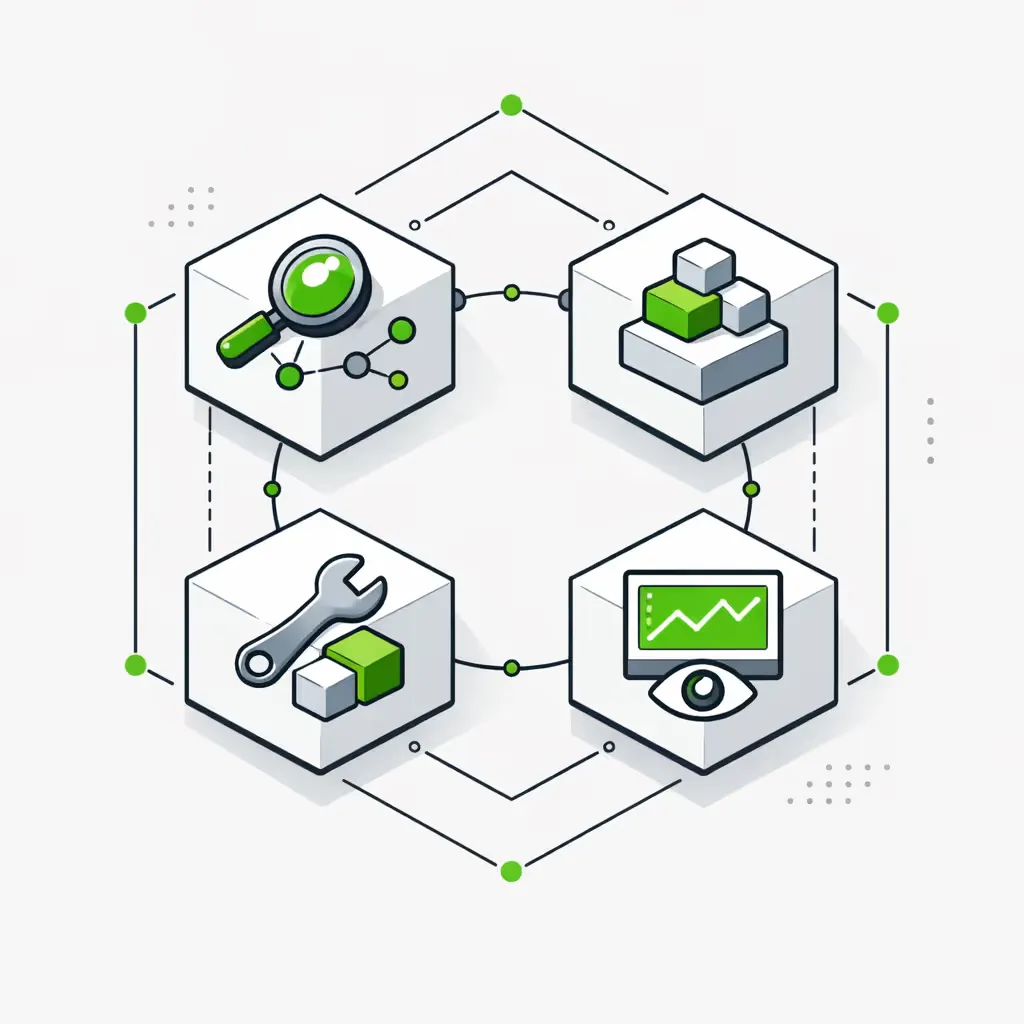
A connected contract pipeline: CRM trigger to obligation monitoring.
General counsels, ops directors, RevOps leads at services businesses
What we automate inside contract operations
Six workflows that turn contracts from email volleyball into a system.
-

Dynamic drafting from CRM
Contracts generated from CRM deal data with conditional logic for terms, pricing tiers, jurisdictions, and renewal language. Sales never opens Word; they fill out structured fields and the contract assembles itself.
-

Redlining & version control
Redlines flow through a single tracked thread instead of email forks. Every change attributed, reviewer routing automated, and version history preserved. Counsel reviews one consolidated diff, not seven inboxes.
-

E-sign + countersigning
DocuSign, PandaDoc, or SignWell triggered automatically from CRM with the right signer order. Reminder cadence built in. Countersignature handoff automated. Signed copy filed back to the CRM, DMS, and accounting.
-

Renewal & expiration tracking
Expiration dates indexed across every active contract. 90/60/30/15-day workflows trigger account-owner tasks, client comms, and renewal-doc generation. Auto-renewing contracts get explicit opt-out reminders before the window closes.
-

Obligation monitoring
SLA terms, deliverable deadlines, MFN clauses, and reporting obligations extracted at contract execution and tracked as active workflows. The system reminds you of obligations before the client does.
-

Contract repository & search
Every signed contract searchable by counterparty, term, expiration, governing law, and clause type. AI-assisted clause extraction so 'show me every MSA with auto-renewal' is a 3-second query, not a paralegal project.
How it worked for Fire Plan Strategies
 Facility Services - Fire Safety Compliance
 How Fire Plan Strategies Eliminated 230 Manual Hours a Month
Lead intake, quotes, invoicing and certificates, automated
- ~230 hrs / monthManual ops time eliminated
- 14 days → 2 daysTime-to-payment
"This is music to my ears. Our accountant is definitely going to love this because she's not going to have to do invoices anymore. The admin staff is also going to love it because they're not going to have to manually do each one of those certificates."
 Mariano VelazcoManaging Partner
 How a contract flows through the pipeline
Five stages, each handed off cleanly to the next.
- 1
Stage 1. Intake
Sales closes the deal in HubSpot or Salesforce; the deal stage transitions trigger the contract workflow. Required fields validated before draft creation - no "we'll fill that in later."
- 2
Stage 2. Template + conditional logic
The right template assembles itself from CRM data: tier, pricing, jurisdiction, payment terms, renewal language. Conditional clauses (data processing, indemnification carve-outs) inserted by rule, flagged for counsel review when outside parameters.
- 3
Stage 3. Redline flow
Counterparty redlines come in as a tracked diff against the current version. Reviewer routing sends material changes to counsel, non-material changes to deal desk. Consolidated diff for sign-off instead of seven email threads.
- 4
Stage 4. E-sign
Signed via DocuSign, PandaDoc, or SignWell with reminder cadence and countersignature handoff. Signed copy filed to CRM, DMS, and accounting automatically. Deal stage moves forward; project creation triggers downstream.
- 5
Stage 5. Renewal & obligation monitoring
Expiration date indexed. SLA, deliverable, and reporting obligations tracked as live workflows. 90/60/30-day renewal cadence kicks off. The contract isn't filed - it's running.
CLM platform vs DocuSign+templates vs custom
-
CLM PLATFORM (IRONCLAD, CONCORD, CONTRACTWORKS, JURO)
Right when contract volume is high, legal is the bottleneck, and clause libraries are mature. You get drafting, redlining, repository, and analytics in one platform. Cost runs $25K-$150K/yr plus implementation. We integrate the platform with your CRM, DMS, and project tools so it actually plugs into the business. -
DOCUSIGN + PANDADOC + TEMPLATES
Right for most $1M-$20M services businesses. DocuSign or PandaDoc for e-sign + templating, your CRM as the trigger, your DMS as the repository. Cost is mostly the tool you already pay for. We build the automation glue - conditional drafting, signer routing, renewal cadences, obligation monitoring - without a separate CLM bill. -
CUSTOM BUILD
Right when you need contract workflow embedded in proprietary tooling - a partner portal, an enterprise client experience, or a regulated workflow that off-the-shelf can't match. We build on the same drafting/sign/repository primitives but in your stack, owned by you.
The Contract Module
Five components that compose the contract automation layer. Use them inside a CLM or stand-alone.
The Contract Pipeline
The complete contract workflow infrastructure for a $1M-$50M services business:
Drafting Engine
Template library with conditional logic, CRM-driven field population, jurisdiction and tier-aware clause selection, and required-field validation before draft creation.
Redlining Flow
Tracked diffs against the current version, reviewer routing for material vs non-material changes, consolidated review for counsel, and audit trail per clause.
E-sign Integration
DocuSign, PandaDoc, SignWell, or Adobe Sign triggered with correct signer order, reminder cadences, and countersignature handoffs. Signed copy filed to CRM, DMS, and accounting in one move.
Renewal Tracker
Expiration indexed across active contracts. 90/60/30/15-day cadence with account-owner tasks, client comms, and renewal-doc generation. Explicit opt-out reminders for auto-renewing contracts before the window closes.
Obligation Monitor
SLA terms, deliverable deadlines, MFN clauses, and reporting obligations tracked as active workflows. Reminders surface to the right team before the client notices.
CLM Integration
Ironclad, Concord, ContractWorks, Juro, and other CLMs connected into the CRM, DMS, and project tooling so they actually run as part of operations instead of as a separate compliance silo. Where you don't have a CLM, we build the pipeline natively.
Audit Trail
Every clause change, signer event, version, and reviewer sign-off captured with timestamp and attribution. Audit prep for SOC 2, ISO, or M&A diligence becomes a query, not a project.
Tools we connect for contract automation
We've built production contract pipelines using these tools across services businesses.
API-firstNative API integrations against every platform listed
CLM platforms
E-sign
Storage / DMS
CRM
Accounting & billing
Project & ops
Engagement & pricing
Builds are priced per project: most take three to six weeks and land between $6,000 and $24,000. Full contract pipelines run $20K-$50K depending on template complexity, jurisdictions, and CLM presence.
Once a build is live it runs without us. If you want us to keep improving it, we agree that separately.
Automation Discovery Week
Builds
Ongoing
Frequently asked questions about contract automation
Ironclad or Concord - do we need CLM software?
Not always. CLM platforms make sense at high contract volume (200+ contracts/year), mature clause libraries, and dedicated legal headcount. Below that, DocuSign or PandaDoc + your CRM + a real automation layer covers 80% of the value at 20% of the cost. We help you decide honestly; we don't get paid by CLM vendors. See our document automation system for the broader document workflow.
Can you build this on DocuSign + our DMS?
Yes - this is our most common build. DocuSign or PandaDoc handles templating + e-sign, your CRM triggers the workflow, your DMS (SharePoint, Egnyte, Drive) is the repository. We build the conditional drafting, signer routing, renewal cadence, and obligation monitor on top. No separate CLM bill.
How does it handle redlining and version control?
Redlines flow through a single tracked diff against the current version - either inside the CLM (Ironclad, Concord, Juro all have native redline) or in DocuSign/PandaDoc with our routing layer. Material changes route to counsel; non-material changes route to deal desk. Consolidated diff for sign-off, not seven email threads.
What about contracts in multiple languages or jurisdictions?
Jurisdiction-aware template selection is standard - the template library indexes by governing law, language, and entity, with conditional clauses inserted by rule. For multilingual contracts we typically anchor on one canonical language with certified translation for the local counterparty version, both versioned and tracked.
Can it auto-extract obligations from existing contracts?
Yes - AI clause extraction handles bulk import of legacy contracts. We extract expiration dates, SLAs, MFN clauses, indemnification, governing law, and renewal terms with human review for high-value contracts. Accuracy on standard clauses is high; non-standard clauses get flagged for legal review. See our document automation use cases post for the underlying patterns.
How do you track renewal dates?
Expiration dates are indexed at execution and run as active workflows with 90/60/30/15-day cadences. Account-owner tasks, client comms, and renewal-doc generation trigger automatically. Auto-renewing contracts get explicit opt-out reminders before the window closes - so you don't get stuck for another year by default.
What's the difference vs Salesforce CPQ contract module?
CPQ contract modules (Salesforce CPQ, HubSpot Quotes) handle quote-to-contract generation well but stop after signature. They don't do redline workflow, obligation monitoring, or post-signature renewal tracking. We typically integrate with CPQ for the front end and extend with contract-pipeline automation for everything after.
Typical engagement?
Builds are priced per project: most take three to six weeks and land between $6,000 and $24,000. A full contract pipeline for a $5M-$30M services business is usually three or four projects over a few months. Most builds take three to six weeks and land between $6,000 and $24,000. ROI usually lands at 3-6 months on counsel-time recovery and missed-renewal prevention alone. Use the ROI calculator to model your case.
Start with an Automation Discovery Week
One week, from $2,000. You'll see where your contract operations leak time - drafting, signature chasing, missed renewals, obligation tracking - and which workflows have the highest ROI to automate first. You keep everything it produces whether we end up working together or not.
For broader context, read our AI automation guide or browse our legal industry page.