Automation Roadmap & Discovery - How We Start Every Engagement
Before anything gets built, we spend a week mapping how your operation actually runs and costing every automation candidate in it. This page is the detail of how that week works and what it produces. The engagement itself is the Automation Discovery Week.
Most automation projects fail in scoping, not execution
A focused diagnostic before the build
Operators evaluating an automation investment
How discovery actually runs
One week. Five stages. About six hours of your team's time, all of it in the first half.
- 1
Day 1-2. Gathering kickoff
We sit with the operators, typically the COO, an ops director and one or two functional leads. Half a day: the business model, the operational stack, the workflows that consume the most time, and the metrics you actually track today. No preparation needed on your side.
- 2
Day 2-3. SOP archaeology
We compare your documented SOPs, where they exist, against what actually happens. Where do operators improvise? Where are the undocumented workarounds? Where do handoffs fail silently? This is where most of the high-payback opportunities are hiding.
- 3
Day 3-4. Opportunity surfacing
We score every candidate workflow by payback (hours saved, revenue impact, risk reduction), implementation complexity and time to value. Workflows that look obvious but score low get parked. Workflows nobody mentioned but score high get surfaced.
- 4
Day 4-5. Roadmap and proposal
We deliver the assets, chosen for what we found: typically the process model, a clickable prototype, the costed roadmap and a written proposal. You keep all of it whether or not you build with us.
- 5
After. Build, if you decide to
Builds run one process at a time, in the order the roadmap sequenced, and are priced per project. Most builds take three to six weeks and land between $6,000 and $18,000. Each one pays for itself before the next starts. If the roadmap says you should not automate anything, it says that, and you still keep the assets.
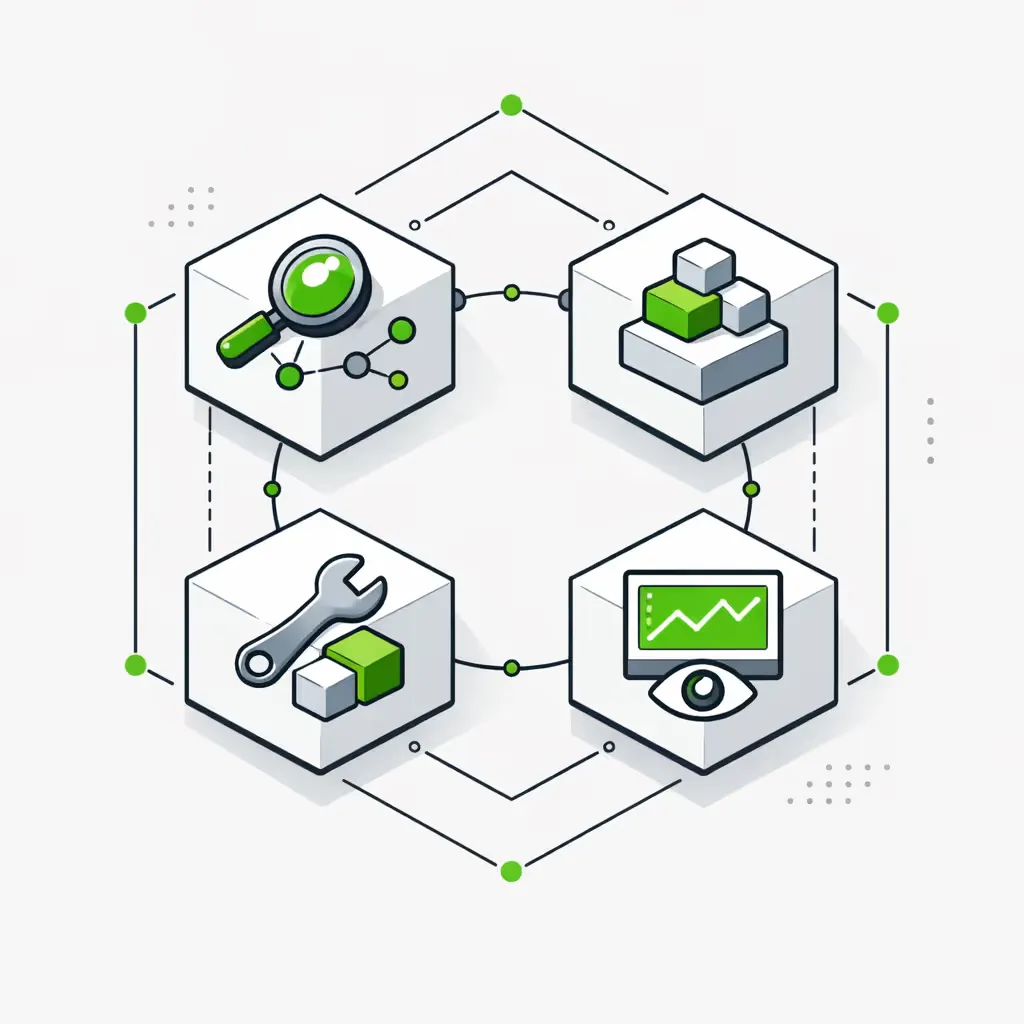
What you leave with
The build-ready assets we produce most often. Which ones you get depends on your business. Each is something a developer, an operator or another vendor can act on, and everything we produce is yours regardless of what you do next.
-

BPMN process model
How the business runs today, one swimlane per actor, with bottlenecks and the first automation targets marked. This is also the SOP archaeology output: the map shows where the documented process and the real one diverge, which is usually where the money is.
-

Clickable prototype
A working front end you can click through before anyone writes production code. It is far cheaper to react to a prototype than to a finished build, and it settles the "that is not what I meant" conversation while it is still free to settle.
-

Sequenced roadmap
Every candidate workflow costed and sequenced by payback, with the technology call on each. A live spreadsheet rather than a picture of one, so changing the blended hourly rate recalculates every figure. Ranked, with the arithmetic shown.
-

Written proposal
Scope, milestones, the technology decision behind each choice, what is explicitly out of scope, and the price. Specific enough that another vendor could build from it. We would rather you handed it back to us, but the choice is yours.
-

Hours and cost per item
So you can judge any single item against the cost of a hire, and stop after the first if that is the right call. What "working" means is written down per phase before anything starts.
What a process map looks like
Different processes, one shared language
These are the kind of BPMN maps we hand back. Anyone on your team, or any future vendor, can read them without us in the room.
Before and after
The same invoice process, before and after
We map how a process runs today, then mark the steps worth automating. Here, four of five steps run on their own in the to-be state. The one judgement call, approval, stays with a person.
Discovery week vs free audit vs go straight to build
-
DISCOVERY WEEK (US)
Right when you know you need automation but not which workflows to prioritise, and you want a costed, ranked roadmap before committing to a build. From $2,000, and you keep everything it produces regardless. Full refund any time before the gathering starts, except Stripe and currency conversion fees (approx. 3 to 5%). -
FREE AUDIT (MOST AGENCIES)
Right when you are price-shopping and want to see vendor approaches without commitment. Honest about the trade-off: free audits are sales tools rather than diagnostics. The output is a proposal, and the time the agency invests caps how deep they can go. We do a 30-minute call for free; the week costs because the depth costs. -
GO STRAIGHT TO BUILD
Right when you already know exactly which workflow to automate and have the SOPs documented, the data flow mapped and the stakeholder alignment locked in. Rare, but it happens. In that case skip the week and we scope a fixed build directly.
Where it leads
The week is not the engagement. It is the diagnostic that scopes the engagement, and it is deliberately priced so that finding out costs a fraction of building.
The full path is honest: from $2,000 to find out, then $6,000 to $18,000 a project to build, one process at a time in the order that pays back first. Each process goes live before the next starts, so you can stop after any of them.
Typical engagement path
What clients say about working with us
"The team at 2V understood the project and completed it with minimal questions. Great communication, delivered on time."

Frequently asked questions about discovery
How is this different from a sales call?
A sales call is 30 to 60 minutes, free, and the output is a proposal. The discovery week is a week, from $2,000, and the output is build-ready assets chosen for your business. The call happens first: we always do a 30-minute call to make sure there is a real fit before recommending the week. See our pre-automation playbook for what to look for in any discovery process.
Is the discovery week required?
No. If you already have SOPs documented, data flows mapped and stakeholder alignment locked in for a specific workflow, we can scope a build directly. In practice this is rare. Usually one of those three things is missing, and the week is the cheapest way to find out which.
What if we already know what we want to automate?
The week usually surfaces one or two things the original request would have missed. If it does not, we tell you so. We would rather lose the project to clarity than win it to a build that does not move the business.
Do we get the roadmap document to keep?
Yes, and the other four assets with it. The roadmap is a live spreadsheet rather than a picture of one, so you can change the assumptions and watch every figure recalculate. You keep all of it whether or not you continue with us, and it is detailed enough to hand to another vendor.
Can we run the discovery ourselves and skip it?
You can. Most teams don't, because the value of an outside operator running the diagnostic is being unafraid to ask "why does it work that way?" about workflows the team has stopped questioning. If you have an internal ops architect who can do that honestly, go for it.
How long does it take?
One business week, and often less, with about six hours of your team's time across it. One half-day kickoff plus a handful of working sessions for SOP review and scoring validation. Most of the work happens on our side; your team's job is to be available and honest. A larger business takes two weeks, because there is more ground to cover.
What does it cost?
From $2,000, fixed, and the price follows team size because the gathering does: $2,000 up to 20 people, $4,000 for 21 to 50. Past fifty we work out the length and the price on a short call first. You can book and pay for it here, and it is refundable any time before the gathering starts, except Stripe and currency conversion fees (approx. 3 to 5%).
What is BPMN and why does it matter?
BPMN (Business Process Model and Notation) is the standard, shareable language for documenting a process. It matters because the map is unambiguous and anyone can read it: your team, your auditors, and any vendor, instead of a one-off diagram only we understand.
What do we walk away with?
Build-ready assets chosen for what we find. Typically the BPMN process model of how the operation runs today, a clickable prototype, the costed and sequenced roadmap, a written proposal, and the hours and cost behind each item. A complete, actionable plan, useful even if you never build anything with us.
Start with an Automation Discovery Week
The discovery week is where most clients start. One week inside the operation, then a costed roadmap that says what to build first and what it pays back.
For more context, read our consulting pillar, browse our Contrail Financial case study, or see which processes to automate first.