Facility Services - Fire Safety Compliance
How Fire Plan Strategies Eliminated 230 Manual Hours a Month
Lead intake, quotes, invoicing and certificates, automated
- ~230 hrs / monthManual ops time eliminated
- 14 days → 2 daysTime-to-payment
What was automated
- Lead intake
- Proposal and pricing quote preparation
- Client onboarding
- Project Invoicing
- Reporting Dashboards

The situation before we showed up
Fire Plan Strategies is a Canada-wide fire safety services company. Two service lines, fire safety plan development and fire safety training, shared one problem: every lead needed the same information typed into three systems by hand.
What was breaking
- Invoices sat in a weekly batch.
Payment averaged 14 days from work completion. Clients were not slow; the bookkeeper batched invoices once a week. - The same data was typed three times.
Client details went from the inquiry form into Podio, then into a pricing agreement, then into QuickBooks as line items. Training certificates were issued one at a time. - Cash flow was a weekly surprise.
The CEO would wake up to $5,000 in invoices that had been sitting in a backlog nobody could see. - Proposals were copy-paste.
Data moved from Podio into JotForm templates by hand, which is where the errors got in.
Why the previous three attempts failed
- Native integrations between their tools
These worked until they did not. When one broke, nobody could see what had gone wrong or fix it, so the company waited on the vendor. - Zapier
A staff member who knew how to handle the remote control built Zaps over time. The result was a sprawl nobody could audit: some worked, some were abandoned, some failed silently, and none were documented. - Building it in-house
A technically-inclined employee got Power BI dashboards partly working but could not finish the automation between JotForm, Podio and QuickBooks.
The pattern was clear. Every previous attempt broke the moment the person who built it moved on or a platform shipped an update. What the company needed was infrastructure that survived both.
What we actually built
We moved their entire automation layer to self-hosted n8n, which gave them full control and, more importantly, visibility. Every workflow is documented, version-controlled and maintainable. As a certified n8n Expert Partner, this is the part we do every week.
Lead to invoice
- Website inquiry forms create a Podio opportunity with the client details already structured
- Pricing agreements generate themselves from Podio data, populate the JotForm template with line items and tax, and email the client
- A signed agreement triggers project creation, typed correctly as fire safety plan or training
- Customer records are created or matched in QuickBooks on a fixed naming convention, so duplicates stop appearing
Invoicing that runs itself
- Fire safety plan projects invoice at 90% when phase one completes, and the balance on shipment
- Training projects invoice once, on completion
- Province-based tax is calculated from a lookup table, so GST, HST, PST and QST stop being a manual choice
- Every invoice carries its project ID, which is what makes the dashboards possible
Certificates without the typing
- Payment received in QuickBooks triggers certificate generation
- The system reads the attendee list, matches the training type to the right template, and emails every participant their certificate
Two architectural decisions did most of the work. Self-hosting n8n on a dedicated server removed per-execution costs that would have been significant at their volume. Putting tax mapping and training configuration in Google Sheets meant non-technical staff can change the rules without calling a developer.
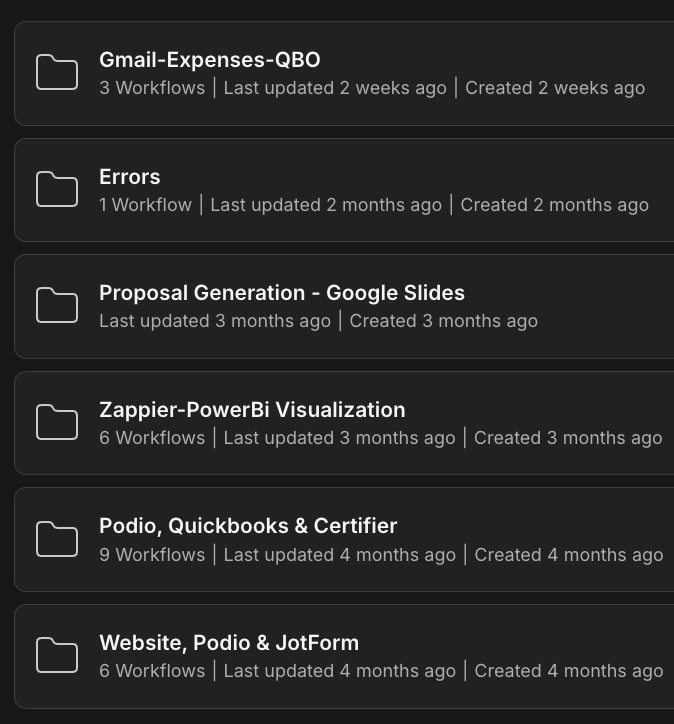
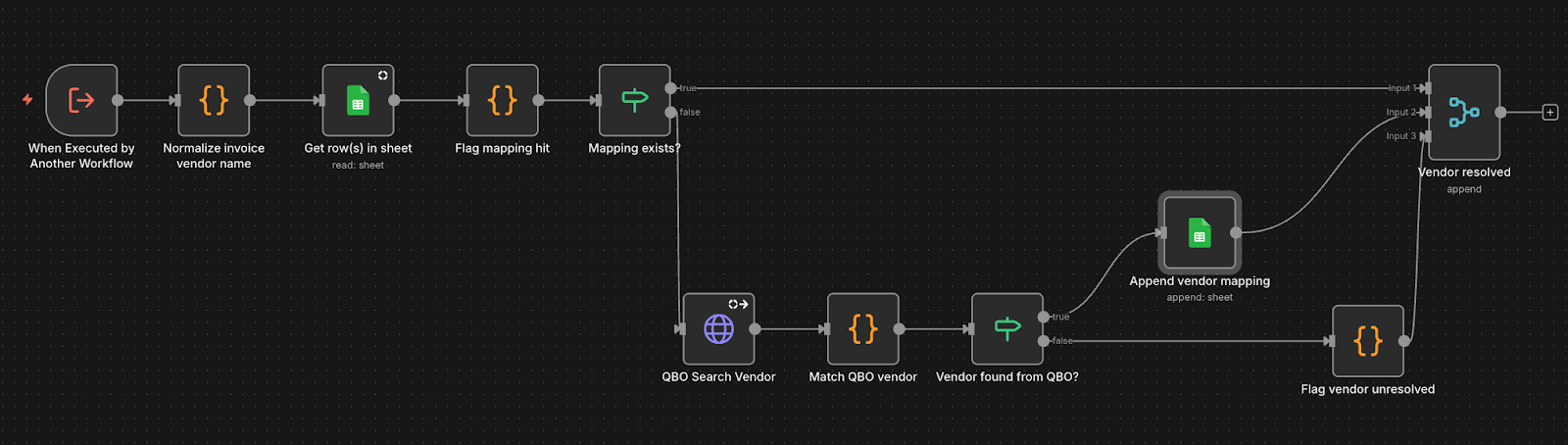
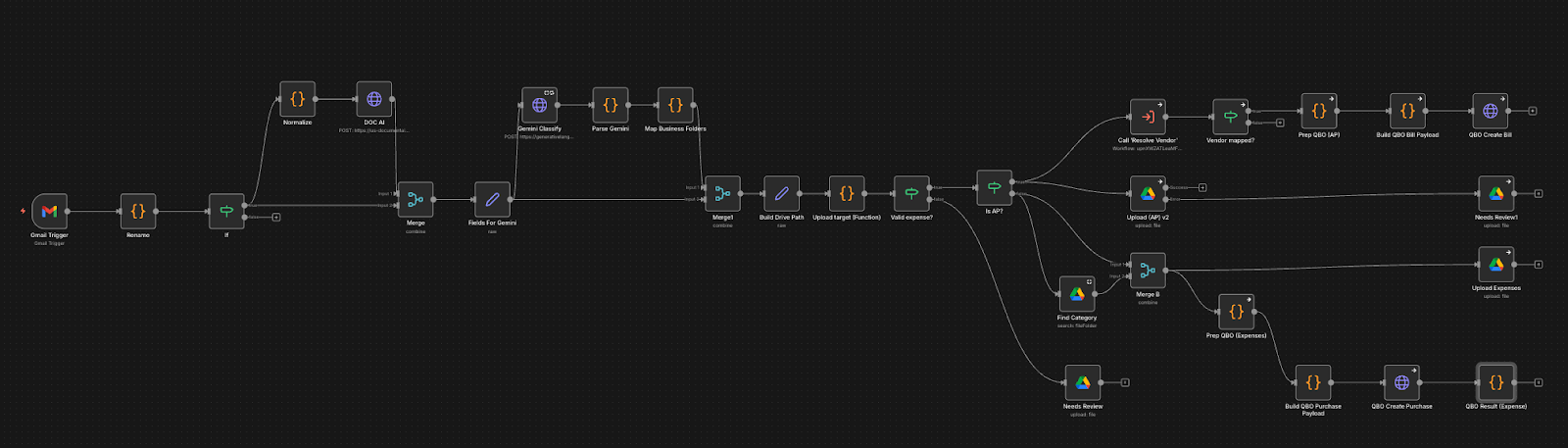
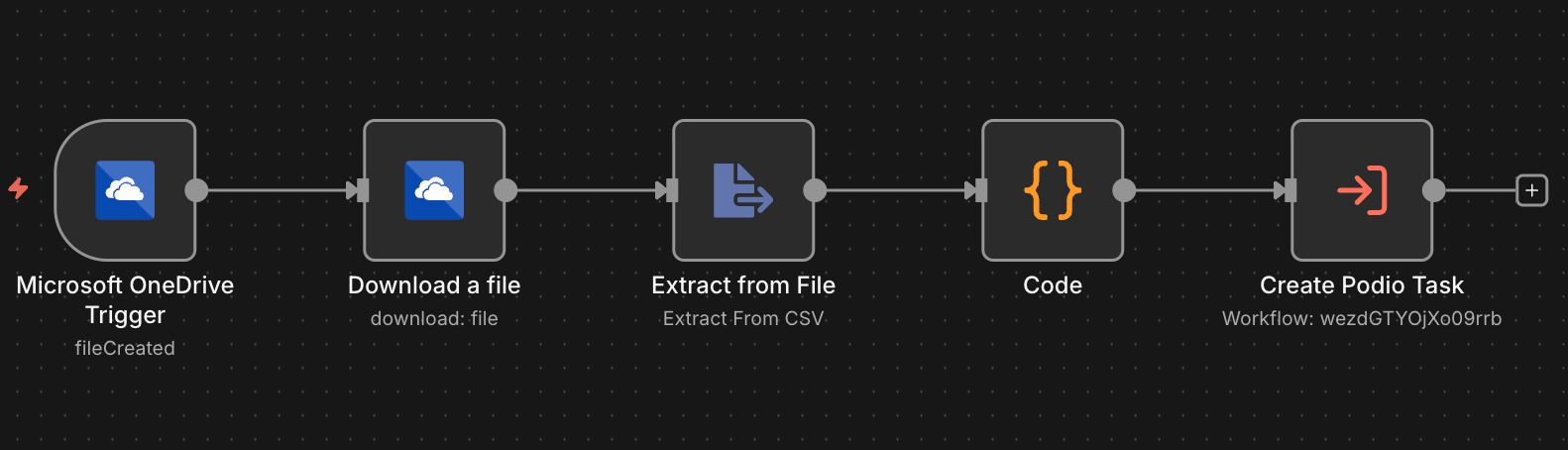
We avoid single unreadable workflows. Complex logic is broken into small sub-workflows that a person can open and understand.

The numbers
Reported by Fire Plan Strategies after the work went live.
Where the 230 hours came from
- Invoice creation and processing
~80 hours a month - Proposal and pricing agreement preparation
~60 hours a month - Lead intake and data entry
~40 hours a month - Client onboarding data transfer
~30 hours a month - Certificate generation and distribution
~20 hours a month
Time to payment
Before
The bookkeeper batched invoices weekly, so a client did not receive a bill for 7 to 14 days after the work was finished.
After
Invoices generate within 20 seconds of the milestone completing and go straight out to the client.
Where the money came from
- A part-time bookkeeper role for invoice processing, no longer needed: $2,400 a month
- Operations staff time returned to the business: $3,800 a month, at 230 hours and an average $16.50 an hour
The handoff
We wrote the documentation and recorded video walkthroughs for the team. Both stay current, which is what prevents the situation they started in, where nobody knew how the automation worked.
What is still running
The system handles more than 100 fire safety plan inquiries with 99%+ uptime. Every execution is logged, and a failure raises a notification instead of breaking silently the way the old integrations did.
The CEO sees cash flow in real time rather than in weekly surprises. Project managers do client work instead of data entry. When something needs to change, the team updates a Google Sheet themselves or asks us for a specific change, without waiting on a platform vendor.
We still work with Fire Plan Strategies. New processes get automated as they become worth automating. That part is optional and always has been; the systems already built run without us.
This is music to my ears. Our accountant is definitely going to love this because she's not going to have to do invoices anymore. The admin staff is also going to love it because they're not going to have to manually do each one of those certificates.
 Mariano VelazcoManaging Partner
 More client stories
 Championship Ring Manufacturing
 Signature Champions: From Spreadsheet Chaos to Automated Revenue
300+ hrs / monthManual ops time eliminated
Custom software development and automation
Read the story"300+ hours of manual work eliminated every month. Recurring processes that ate our team's time are gone entirely."
 Financial Consulting/Fractional CFO
 Automating Daily Market Intelligence Briefs for a Finance Firm
30+ hrs/monthFounder time saved
Custom newsletter automation
Read the story"I had a great experience working with 2V Automation. They were highly responsive, knowledgeable, and professional throughout the project. The team delivered..."