Legal tech, SaaS
How we built Legally.io, a legal document platform for seven countries
Guided questionnaires, e-signature, storage and subscriptions in one product, built from the first research to ongoing support
- 300+legal document templates, drafted by lawyers
- 7countries, each with its own templates and language
- End to endfrom research and UI drafts to ongoing support
What we built
- Research and UI drafts before any code
- Template engine with guided questionnaires
- Document editing, download and sharing
- E-signature
- Accounts, workspaces and subscription payments
- Permanent document storage
- Admin panel for templates and content
- Multi-country and multi-language rollout
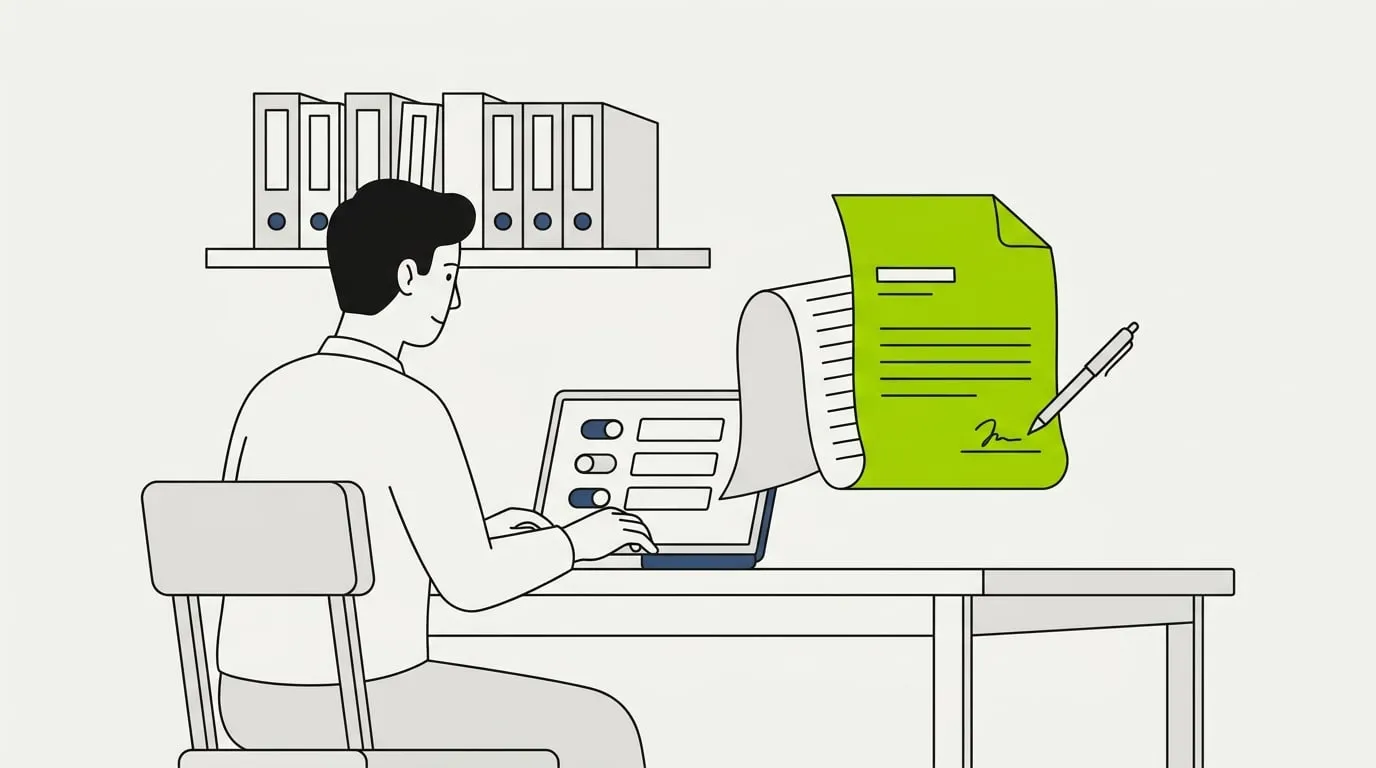
Legally.io lets people draft, customise and sign legal documents without hiring a lawyer. We built the whole product: the research and the first screens, the template engine and the questionnaires, signing, payments, storage, the admin side and the rollout to seven countries. We still support it.
The brief
Most legal documents people need are routine. A lease, a non-disclosure agreement, a power of attorney, a service contract. The text is well understood by lawyers, and what changes from one person to the next is a short list of facts: who, what, where, for how long, on what terms.
The brief was a product that asks those questions in plain language, produces a document a lawyer would sign off on, and lets the user sign it and keep it. It had to work in more than one country, which meant more than one legal system and more than one language, from the first version.
A legal document is a questionnaire with a very good answer sheet. Once we saw it that way, the product had a shape: a template carries the legal text and the questions, the user answers, and the engine assembles the two into a finished document.
Research and screens before code
We started with the questions people ask when they look for a legal document, and where they give up. Someone who needs a rental agreement does not know which clauses matter, whether their country’s version is different, or what happens after they download a file.
That research turned into UI drafts before any code was written. The core screen is the questionnaire: one question at a time, in plain words, with the document taking shape beside the answers. Everything else, from the template library to signing and storage, was drafted around that screen and reviewed before the build started.
What we built
Template engine and questionnaires. Each template holds the legal text, the questions that fill it, and the logic between them. An answer can add a clause, remove one, or change the wording of another. The user sees a guided form; the engine sees a tree of conditions and produces the document at the end.
Editing, download and sharing. The finished document can be reviewed and adjusted, downloaded, and shared with the other party.
E-signature. Documents are signed online inside the product, so a contract goes from questions to a signed file in one place.
Accounts, workspaces and payments. Users sign up, keep their documents in a workspace and pay by subscription. The product runs a free plan with limited, watermarked documents and a Premium plan with unlimited documents, permanent storage and signing. Payment methods are localised, including iDEAL for the Netherlands.
Storage. Signed and unsigned documents stay in the user’s account, organised and available later.
Admin panel. The Legally.io team publishes and updates templates, categories and content without a developer.
Seven countries. The United States, the Netherlands, France, Spain, the United Kingdom, Germany and Italy, each with its own template set and language. A template is tied to a jurisdiction and a language, so a Dutch lease and a German lease are different documents that share the same engine.
How it is built
The back end is Laravel on PostgreSQL. The front end is React, which suits a questionnaire that rebuilds the document preview as the user answers.
- One template model, many jurisdictions. Legal text, questions and conditional logic live in one structure per template, keyed by country and language. Adding a country means adding templates and translations, with the engine unchanged.
- One template per document type and country. A clause that applies only in some cases is a condition on the template, so there is one template to maintain per document type per country rather than one per variation.
- Signing, payments and storage as product features. Each is a module behind the same account, so the user never leaves the product between drafting and a signed, stored file.
Without the product
Find a template online, guess which clauses apply, edit a file by hand, print it, sign it, and keep the copy somewhere.
With Legally.io
Answer the questions, review the document, sign it online, and find it in your account whenever you need it.
Where it is now
Legally.io runs as a subscription SaaS product with more than 300 templates in seven countries. The product shows a 4.5 rating on Trustpilot from more than 4,000 reviews. We continue to support and extend it.
What this engagement shows. A product from a blank page: research, UI, a template engine with real legal logic, signing, payments, storage, an admin side and a multi-country rollout, on Laravel, PostgreSQL and React. The same team builds the internal tools and automation layers on the rest of this site.
Legally.io is at legally.io.
More client stories
 Facility Services - Fire Safety Compliance
 How Fire Plan Strategies Eliminated 230 Manual Hours a Month
~230 hrs / monthManual ops time eliminated
Lead intake, quotes, invoicing and certificates, automated
Read the story"This is music to my ears. Our accountant is definitely going to love this because she's not going to have to do invoices anymore. The admin staff is also..."
 Championship Ring Manufacturing
 Signature Champions: From Spreadsheet Chaos to Automated Revenue
300+ hrs / monthManual ops time eliminated
Custom software development and automation
Read the story"300+ hours of manual work eliminated every month. Recurring processes that ate our team's time are gone entirely."